PETER L. STEIN
  • About
    • Bio, Honors & CV
    • Contact
  • Film / Media
    • TV / Film Productions
    • Film Festivals
    • Museums & Online
    • Consulting
  • Onstage
    • Interviewer / Moderator
    • Teacher / Lecturer
    • Writing & Performance
  • News & Views
  • Calendar

Lafee, Lenny & LGBT Movies

5/21/2014

0 Comments

 
Picture
It’s shaping up to be a varied and busy next few weeks, so here’s a quick update on some activities where you can find me hanging out onstage, backstage, and in character…in a 75-seat black box…at the Berkeley Rep…and back in the Castro Theatre.

Lafee: This coming Sunday evening (May 25), I’ll be performing an excerpt of my (creeping-toward-the-finish-line) solo play The Disappearance of Alfred Lafee. The scenes (about 20 minutes in all) are different from those I performed in February at The Marsh and Stage Werx, though if you saw me at the Berkeley Marsh last year you will recognize them. The rest of the interesting lineup at Solo Sundays will be new, so take a break from the grill this weekend and come down and join the fun.

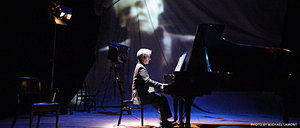
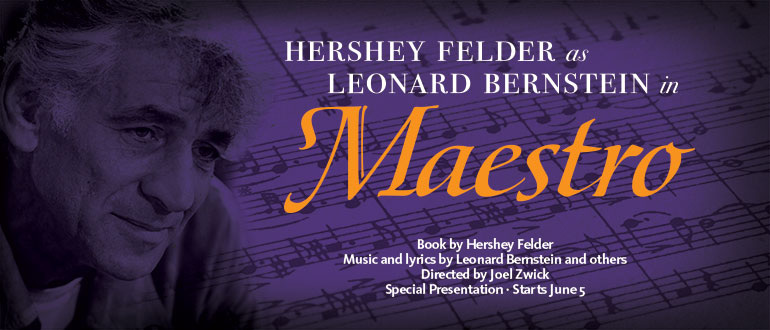
Lenny: The talented musician/playwright/ performer Hershey Felder—you may have seen his one-man show about George Gershwin last year at the Berkeley Rep—has a new solo piece called Maestro, all about the lives and loves of the inimitable Leonard Bernstein. I’ll get a chance to chat with Hershey Felder in an onstage conversation after his performance on Sunday evening June 15, as part of a benefit evening organized by the great people at Jewish Family Children’s Services of the East Bay. Come out and see an interesting show and support a fantastic organization. Tickets for this special performance are here.

Picture
Picture
Picture
Picture
LGBT Movies: I’ve had a great time this spring working as Senior Programmer for Frameline, the upcoming 38th annual San Francisco International Lesbian Gay Bisexual Transgender Film Festival. We have curated a fabulous collection of 214 films from more than 30 countries. The festival runs June 19-29 – and the program is now online! Tickets go on sale Friday May 23 for members, next Friday (May 30) to the general public. I’ll post another blog entry with some personal favorites and observations, but start browsing the lineup now, it’s pretty hot! Of special pride and interest: a very timely and (I believe) necessary spotlight on new Russian features, documentaries and shorts  with LGBT subject matter, highlighting some especially brave filmmaking in this difficult moment for Russian LGBT artists and citizens.
0 Comments

Thursdays with Matza

4/15/2014

0 Comments

 
Picture
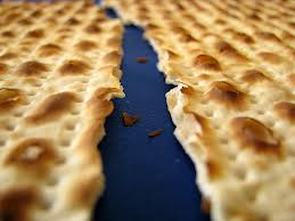
If you visited my grandparents any Thursday morning at their house on Beaumont Avenue in San Francisco, you were likely to find my grandfather noisily slurping his coffee and munching on a piece of matza. Thursday was when you also might meet Mrs. Fujimoto on her weekly visit to their house. Mrs. Fujimoto – we never learned her first name, it was just Mrs. Fujimoto. Kind of like in that old TV series where the Japanese housekeeper was just called “Mrs. Livingston”—the nice lady who would call Bill Bixby “Mr. Eddie’s Father.” In our family, we already had a Mrs. Livingston —it was my grandmother. That was her name. Mrs. Fujimoto called her “Mrs. Livingston.”

In 1939, my grandparents had left behind their house on Viktoriastrasse, a leafy lane in the town of Elberfeld, where generations of German Jewish women like my grandmother had kept impeccably well maintained, intimidatingly scrubbed homes...Cleaning was something of a sub-religion, a new denomination in the ever- more-secular Jewish world of my grandmother. This was something she had in common with Mrs. Fujimoto, who, I should clarify, was not a German Jew. My grandmother went at housecleaning like a demon, and even in the Weimar years, when my grandfather’s ribbon factory in Elberfeld was doing well and they had the money to hire housemaids, my grandmother was loath to turn over the cleaning to anyone else. Oh, she had no qualms assigning the intimate task of breast-feeding my mom to a wet nurse, but polishing the silverware?--ach Du lieber, now that was personal.

My grandparents had left a lot behind in Germany—their language, which upon arrival in America they pretty much refused to speak, except unconsciously when counting out playing cards and totting up points in their weekly bridge games, or in the occasional nursery rhymes they would sing to my sister and me. Hoppa hoppa Reiter, wenn er fällt dann schreit er...

So they left behind their language, if not their accent. And their house on Viktoriastrasse, if not their cleaning habits. And they left behind their mothers. My grandfather had to make a bargain with the Kommandant at Dachau—said he already had visas to leave with his wife and children, just release him and they’ll get out on the first available ship to America, stop waiting for the mothers’ visas to come through.

No time for the bread to rise: my grandparents, like the Jews of Egypt, left in haste. They threw their clothes into suitcases, they hid my grandmother’s jewelry in the insulation of the icebox door, and they left their house and their mothers in Elberfeld. The icebox got out. Their mothers didn’t.

My grandparents’ house in San Francisco still felt to me like a piece of the Old World: there was a certain Prussian formality, tempered by very warm and generous surprises—a secret candy drawer...toys hidden in the piano bench...a foosball game in the closet. Reluctantly as she aged, my grandmother yielded more and more of the housework to Mrs. Fujimoto—a fellow San Franciscan who had her own family story of wrongful imprisonment. Her family too had left their homes in haste, spent the war in internment camps, and had returned to San Francisco simply to carry on their lives.

My grandmother loved Mrs. Fujimoto, respected her talents. She may have been the only housekeeper who actually exceeded my grandmother’s exacting standards. Before a Thursday morning visit, my grandmother would go around the house anxiously fluffing the pillows...tidying up for the housekeeper. And Thursday mornings were the only time that my grandmother allowed her husband—the man she had married at age 19 and with whom she would eventually spend 72 years— yes, Thursday mornings were his one weekly appointed time to eat his beloved breakfast treat: matza. You see, matza was simply too crumbly to risk being eaten on days when Mrs. Fujimoto was not on hand to vacuum away the offending shards.

I don’t know if my grandmother ever explained to Mrs. Fujimoto what the little cracker crumbs were that she vacuumed up every Thursday. But I can imagine how it might have sounded, the way my grandmother would say it as we gathered around the seder table:

“This is the bread of affliction which our ancestors ate in the land of Egypt.
Let all who are hungry come and eat.
Let all who are in need come and celebrate.
This year we are slaves: Next year may we all be free.
”

--Peter L. Stein
April 2014
San Francisco

commissioned by and presented  at the City Winery's Downtown Seder, San Francisco, 4/9/14


0 Comments

New year, new performances

1/2/2014

0 Comments

 
Picture
My faithful blog readers have been inquiring when, oh when, will I be offering more glimpses of the solo play I have been developing (“The Disappearance of Alfred Lafee”). Never one to disappoint my fan base, I am pleased to tell both of you that this winter offers several chances to see excerpts. 

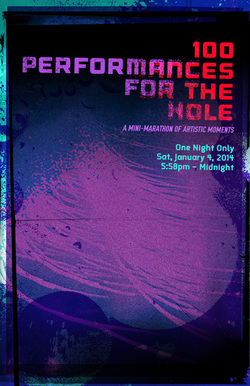
For those with short attention spans, this coming Saturday night Jan. 4 may be the perfect show: I’ll be participating in the fourth annual “100 Performances for the Hole” at the fabulous SOMArts Cultural Center (the hippest, going-est art/performance space in the city, just sayin’). “100 Performances for the Hole” is exactly that: starting at 6pm, watch a variety of mad, weird, beautiful, edgy, baffling performances emanating from the mysterious casting pit concealed in the floor of the old warehouse that now houses SOMArts.  Each artist gets 1 minute to set up, 2 minutes to perform, and 1 minute to clean up. NEXT! Come on the late side…I am performer #95…taking my 2 minutes around midnight!

If you are not a night owl but want to watch the proceedings anyway, you can see it streaming live on SF Commons.

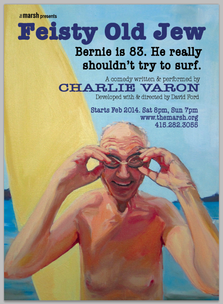
In more traditional venues, I’ll be offering 10- to 15-minute excerpts of the play later in February. I’m particularly honored that veteran (and brilliant) solo performer Charlie Varon has asked me to be a kind of “opening act” for one of his upcoming performances at The Marsh, where he is debuting a new solo show, “Feisty Old Jew.” Perfect fit for the two of us. I’ll be offering my excerpt as a curtain-raiser (metaphorically… the Marsh has no curtain) for his 8pm show on Saturday Feb. 22. Click here for tickets, just make sure you are selecting that night’s show if you want the one with me as the appetizer course.
Picture
PictureThe Disappearance of Alfred Lafee
The following night, Sunday Feb. 23, I’ll be part of the lineup at Solo Sundays at the Stage Werx Theatre, 7pm show. I’ll post more details about the rest of the bill as we get closer.

And I promise, not all of my 2014 blog entries will be relentless self-promotion. Just this one. And maybe one in February. And maybe the one....

(Happy New Year anyway!)


0 Comments

Documentary Editors in the Director's Chair...Hooray! (and Dammit!)

9/20/2013

2 Comments

 
Picture
Scanning the upcoming Mill Valley Film Festival lineup, I feel like a proud uncle. Back in the 1990s, I had the foresight to hire (and the pleasure to work with) three terrific documentary editors on the public television series Neighborhoods: The Hidden Cities of San Francisco. Now all three editors are getting recognized as multi-talented filmmakers in their own right, and, in a kind of festival trifecta, all of them are featured this year as DIRECTORS of fascinating documentaries, which I urge you to catch next month in Mill Valley (or elsewhere on the festival circuit).

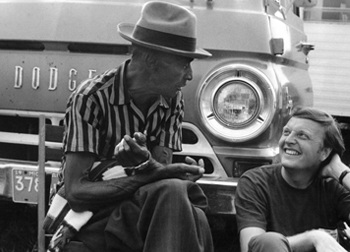
Maureen Gosling—the sensitive and intuitive longtime editor of the seminal films of the late Les Blank—was the editor of the first documentary in the Neighborhoods series, The Mission, back in 1994. Now she has both edited and co-directed This Ain't No Mouse Music! The Story of Chris Strachwitz and Arhoolie Records, a fond tribute to that pioneering American roots music label.
Picture
Picture
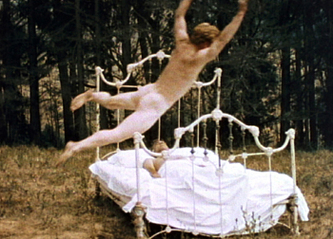
Dawn Logsdon—whose gifts with archival imagery and footage made her an ideal editor on The Castro—not only edited but also co-directed the exuberant profile Big Joy: The Adventures of James Broughton, an eye-opening portrait of the complex filmmaker/poet and quintessential Radical Faerie.  If you missed it at Frameline this year, the film is itself a big joy.

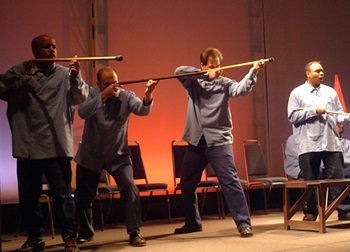
Joe De Francesco brought his passion and convictions as an editor to two episodes of the Neighborhoods series, both Chinatown and The Fillmore. (Showing he has either exquisite taste or a tinge of masochism. Or both.)  I think back in the 90s he was already working on a crazy project to stage an epic poem about the Civil War with inmates at San Quentin. He pulled it off…and now has crafted a moving documentary of the performance and the experiences of the inmates as they encounter a poetic drama that has much to say about race, love, violence and the American character. Don’t miss the world premiere of “John Brown’s Body” at San Quentin Prison.
Picture
Seeing these three talented editors take wing in new roles is, of course, thrilling to me (I am after all the poster child of artist-wearing-many-hats), but also, I confess, dispiriting. I mean, why do they need to leave the pigeonhole that I have happily consigned them to? They are damned good documentary editors—a rare and ornery breed. Once they’ve flown the coop and started to soar into the rarefied air of directing, well, they may never come flying back into the dank editing suite. Some great documentary editors—Jeffrey Friedman, Yael Hersonski, Debbie Hoffmann—flew away and seem rarely tempted back.

Then again…documentary directing/producing is not exactly a paradise. Perhaps after a few miserable dawn-to-midnight shoots…or the 20th rejected funding proposal…or the 50th headache over uncleared music rights…perhaps the pure content focus of editing will lure them back to their chair.

That’s a long shot. Try as one might to pigeonhole these rare birds, the fact is, talent will out.  And with these three talents—not to mention a name like Gosling—they are bound to fly.

2 Comments

The Cinema Club kicks off a new season Sept. 22

9/8/2013

0 Comments

 
Picture
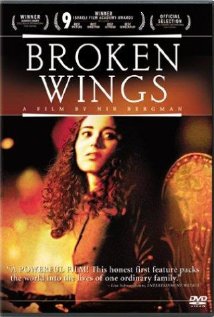
Nearly 10 years ago, my friend and colleague, the noted film scholar B. Ruby Rich, asked me to speak to a group of film lovers on a Sunday morning about a new Israeli drama she had programmed for them to see. It was a film that hadn't opened yet theatrically--Nir Bergman's Broken Wings--but I was excited to talk about it with others.
    "Is it a film class?" I asked.
    "Well, not exactly," said Ruby. "It's a club. We screen new movies and then talk about them, sometimes with guest speakers. You probably know some of the club members, there are about 150 film fans from around the Bay Area."
    Straightforward enough...but then Ruby added the twist: "Just don't tell anyone beforehand what the film is. The whole point is they don't know what movie they're seeing until they show up at the theater."

    This was my kind of film club. I had realized from attending many film festivals that one of the greatest pleasures of seeing a film early on is being able to experience it as a tabula rasa, before the hype, trailers, reviews and even word-of-mouth had influenced my perception of it. (This is the premise, for example, of the Telluride Film Festival, whose selections are not announced, even to the press, until it opens.) Seeing films this way, especially when you trust the curators, heightens both your sense of discovery and the surprise of enjoying something you might have skipped when influenced by preconceptions.
Picture
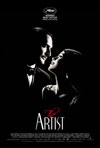
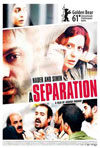
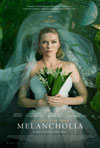
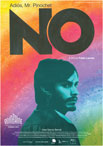
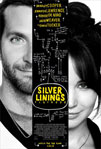
    That screening with Ruby turned out to be the beginning of a long relationship with San Francisco's chapter of The Cinema Club--a nine-city network--because the following year I joined Ruby as a co-moderator (I was later joined by my colleague from the San Francisco Film Society, Rod Armstrong). I've been co-moderating now for about eight years, and we've had the pleasure of early screenings of Slumdog Millionaire, The Artist, A Separation, Silver LInings Playbook, No, and Melancholia, among many others, programmed from the home office in Washington, DC, with input from several of us moderators. Sure there have been some clunkers along the way, but the conversations afterwards are invariably stimulating.
Picture
Picture
Picture
Picture
Picture
    On September 22, the Fall 2013 season kicks off with a screening of the much anticipated new film....(ha! tricked you. We still don't announce them beforehand. Or more precisely, if you are a subscriber and you really want to know, you can find out one day beforehand. But I recommend the surprise method.)
    If you'd like to learn more about the club, which meets seven times in both the Fall and Spring seasons at the Sundance Kabuki, you can check out the website or read Sam Whiting's San Francisco Chronicle feature, which ran a couple of years ago.
0 Comments

Woody Allen's Fictional San Francisco

8/29/2013

4 Comments

 
Picture
Why are there more working-class white characters in Woody Allen’s new movie than in the entire 415 area code?

And why do they all sound like they’re from Queens?


Like many San Franciscans, I was titillated last year when Woody Allen announced he would be returning—after an absence of more than 40 years—to shoot a new film in my hometown, his first local shoot since “Play it Again, Sam” in 1972. We had been feeling ignored.

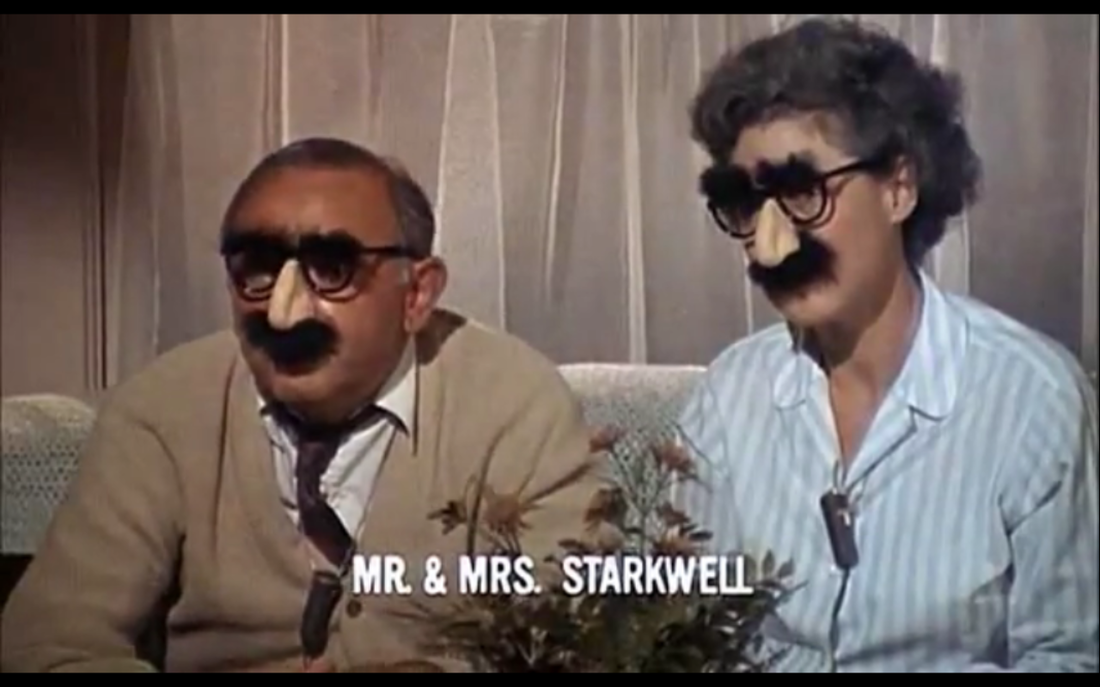
In the intervening four decades he had positioned his cameras along virtually every block of Manhattan’s Upper East Side, not to mention iconic scenes filmed in Los Angeles and even whole movies set in London, Paris, Rome and Barcelona. What are we, chopped liver? Sure, we might have been good enough for the early silly comedies (the father of a high school friend of mine had a bit part in “Take the Money and Run,” to his eternal fame, see right), but it seems we were not sophisticated enough for Woody’s mature classics. To think we didn’t even rate for any of those middling, workmanlike films he was churning out in the 90’s…ouch.
Picture
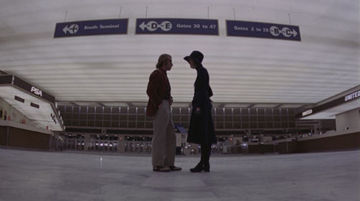
Woody Allen and Diane Keaton on location at the old SFO Airport in "Play it Again, Sam," 1972.
Picture
Henry Leff and Ethel Sokolow, San Franciscans, in "Take the Money and Run," 1969.
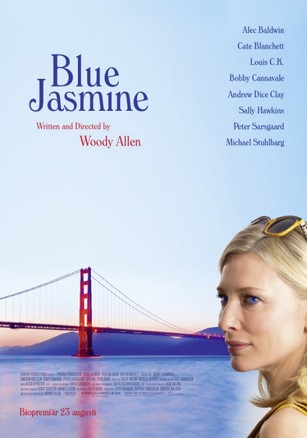
But with “Blue Jasmine,” the prodigal Jewish son redeemed himself among local cinephiles. The weeks he was shooting last summer in the Bay Area ushered in a daily game of “Where’s Woody?” with rumored sightings of the famously reclusive director recorded in the local papers, along with online speculation about the nature of each scene (“a fancy party in Belvedere!” “a marital squabble in the Mission District!”); guesses on each actor’s role (“Bobby Canavale plays a car mechanic!”); and breathless reports from friends who scored precious slots as background players (a.k.a. “extras,” for those new to the glamour of the cinema).

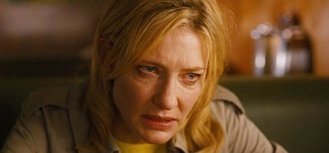
PictureCate Blanchett in "Blue Jasmine"
So I attended the film eagerly to see how our city fares, encouraged by early word about Cate Blanchett’s performance. The latter is a complete knockout. As many of you will know by now, she plays a cross between Ruth Madoff and Blanche DuBois, creating a Xanax-popping, Chanel-jacketed, semi-delusional socialite, tightrope-walking on the edge of nervous collapse. Blanchett is amazing, and her character, Jasmine French, is as sharply observed a female role to emerge from Woody’s keyboard as any in “Hannah…” “Vicky…” or “Annie Hall.”


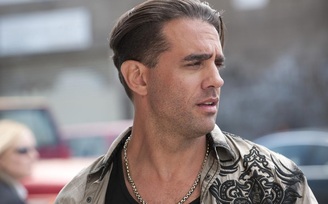
PictureBobby Canavale in "Blue Jasmine"
And there’s the rub. The full-blooded believability of Jasmine and her privileged world—including all the scenes in Manhattan and the Hamptons—is what makes it so frustrating to observe the cardboard inauthencity of most of the important “San Francisco” characters that Woody has peppered throughout the film. Who are these people? Bobby Canavale, Andrew Dice Clay, Louis C.K…. never has San Francisco looked and sounded more like Queens. It’s as if Woody—and his usually impeccable casting director Juliet Taylor—plucked garden variety working-class characters from his stock repertoire and pasted them into a Bay Area setting without any sense of their actually belonging there, or giving them any backstory that made sense out of their living in the Mission (Canavale), the Outer Sunset (Clay), or Marin County (C.K.). As Jasmine’s struggling working-class sister,  “slumming it” at 14th and South Van Ness, Sally Hawkins fares a bit better, perhaps because she has the skills to transform her native English accent into something you’d actually hear in the Mission (note to Woody, though: that neighborhood has for years been a hotbed of rising rents, hipsters and Googleistas).

But more jarring than the accents, the San Francisco these characters inhabit includes virtually no Asians, no Latinos, and no gay people—at least none with any lines. It’s all white working class (a minority population in the 415 if there ever was one), and not an especially Bay Area version of that sub-group to boot. In one scene, Canavale’s buddies hang out watching boxing and eating pizza; how hard would it have been to get them to lose their Joisy accents and scarf some burritos during a 49er game…or better yet, a Raiders game?
So while I was delighted to see some odd corners of my city show up in a new Woody Allen movie, I left feeling that we hadn’t really been understood very well. It was a tourist’s-eye view of our town, written by someone using a slightly out-of-date guidebook and a very out-of-touch social map. Maybe the absence of 40 years took its toll on Woody the writer. I am not certain he could conjure up an authentic sense of a city he hadn’t really seen since Nixon was in office. Even “Play It Again, Sam” wasn’t exactly a documentary, but he got away with a nostalgic view of the city since his main character was (literally) haunted by a noir-era Bogart.
To be fair, Allen often gives us highly romanticized versions of his locales, from Gershwiny Manhattan to accordion-soaked Paris. But in “Blue Jasmine,” the disparity between the spot-on depiction of Jasmine’s high-end New York and the off-target imitation of down-market San Francisco (an oxymoron in itself) left me feeling queasy. It seems last year’s visitation from Woody wasn’t really a location shoot after all; San Francisco was, in the dubious tradition of Hollywood studio pictures, just another backdrop.

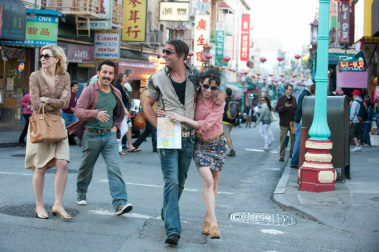
Picture
"Blue Jasmine" characters play tourists in San Francisco. Except three of them are supposed to live there.
4 Comments

Into the Void... (with James Turrell at the Guggenheim)

8/26/2013

1 Comment

 
Picture
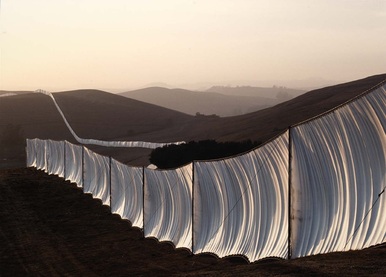
Traditionalists are often aghast when contemporary artists attempt to intervene into and transform iconic places—even temporarily. As a teenager, I remember the outcry in the Bay Area when the artists Christo and Jeanne-Claude proposed to erect their “Running Fence”—a 25-mile long shimmering strand of veils that rippled across the Sonoma hills to the sea, and stood for only two weeks. People scoffed at the wasteful effort, ridiculing the artists’ attempt to comment on, let alone improve, what nature had, in its glory, already made perfect. And yet whenever I meander through the grassy coastal hills near Bodega Bay, the image of that fence remains vivid. The transformation of the landscape seems to have had a potent afterlife in my unconscious: I round a corner, wondering if I might still glimpse it; lines of white sheep scattered across the hills bring to mind the desultory rambling of that fence; and actual wooden fences seem stolid and heavy in comparison to the linen veil that lasted only a fortnight. The work permanently shifted how I see the landscape. And that of course was the point—a shift in perception.

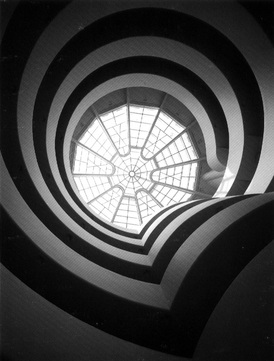
I was reminded of this last week on a visit to Manhattan, when I stopped by the Guggenheim Museum: another iconic place, temporarily transformed in a way that I think will be hard to shake. James Turrell, an artist I especially like who works with light and volume, has taken as his canvas the legendary spiraling rotunda that constitutes the interior of Frank Lloyd Wright’s 1959 building. You’ve got to have some serious chutzpah (or substitute your foreign-sounding noun of choice…cojones? hubris?) to fiddle around with Wright’s legendary spherical volume, with its gently rising rampways that culminate in a spider-web dome window.
Picture
Wright's Guggenheim rotunda
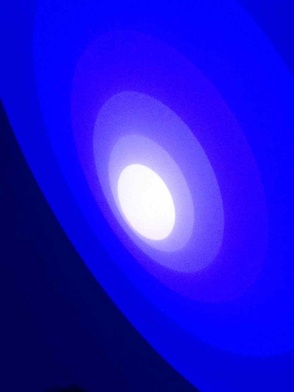
And yet Turrell has created something magnificent inside Wright’s space that obliterates the memory of it even while paying homage to it. Walking into the rotunda, one enters not a rounded architectural volume, but an enormous light chamber. Looking up, one sees not the spherical solidity of a building atrium, but a numinous void…a series of concentric ellipses, slowly shifting in hue, now gray, now rose, now indigo, but always receding in intensity toward a glowing white center. There is no sound track (other than the constant, and sometimes annoying, burble of visitors); and since the second week of the installation, padded mats have been tossed onto the floor to accommodate the inevitable impulse to gaze, supine, into the void.
Picture
Picture
As I stared, transfixed, into the light-space, I found myself disoriented—was this really the Guggenheim rotunda, now misshapen into an oval? Was I actually staring up into five stories of space, or was this somehow a flat surface, a screen with projected colors that told some kind of abstract narrative? And I realized that this disorientation was precisely the idea of Turrell’s work—it made you take a step away, even if unconsciously, from the known, rationally perceived world into a more ambiguous, unsettling, mysterious place.
Some have carped about the installation—offended by the excess of a gold-plated institution throwing a lot of money at a brand-name artist. Others find the whole idea an exercise in gilding the lily. The Guggenheim rotunda is already a masterwork of light and volume, so why make it another such space? But as I keep turning my thoughts back to that glowing elliptical teleidoscope, I realize that, as with the Sonoma hills, I will likely never be able to experience the Guggenheim in the same way again…the memory of those ellipses will always be vibrating at the fringes of my perception. And that alone makes this artwork a phenomenal achievement.

(Do you have a favorite—or failed—example of an artistic transformation?  I. M. Pei’s Louvre pyramid? Something by Andy Goldsworthy? Feel free to add your own memory, comment or experience below!)   

1 Comment

In conversation with Jhumpa Lahiri

8/11/2013

0 Comments

 
Picture
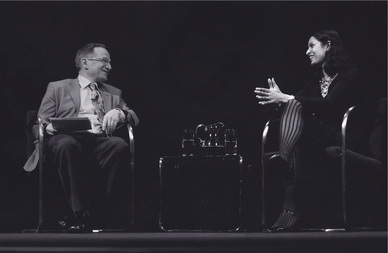
Peter L. Stein & Jhumpa Lahiri in Santa Fe, 2009. Photo: Don J, Usner
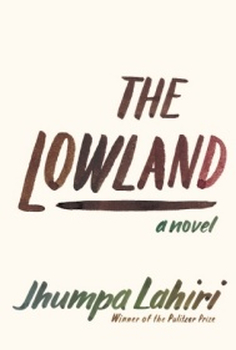
Jhumpa Lahiri has made a well-deserved name for herself (and snagged a Pulitzer Prize) with her two collections of short stories, which are among the more sublime prose offerings of the last 20 years. Her most recent collection, Unaccustomed Earth, featured a set of interlocking stories in the second half that inched ever closer to being a novella rather than an independent trio of stories. So I am thrilled, but not surprised, that her forthcoming publication, The Lowland, is a full-fledged novel, her first since The Namesake, which many will remember from its film version. As with her previous work, The Lowland examines the lives and yearnings of families divided between India and the U.S.; her storytelling is at once intimate and powerful. The new novel has already been included in the long list for this year’s Booker Prize in the U.K. [Update Sept. 10: it's now one of six shortlist finalists!]

I first met Jhumpa in 2008 when I interviewed her in a public event at the San Jose Museum of Art. We quickly found that we shared an ongoing love (and erstwhile scholarly pursuit) of Renaissance English drama. She pursued it big-time, as a graduate student, I merely as a college undergraduate. But we bonded over Jacobean masques; and so it was that I have now interviewed her over the past few years in numerous locales (the black-and-white photo is in Santa Fe), and I will happily sit down with her again on October 11 in San Francisco’s refurbished Nourse Auditorium for City Arts & Lectures. The event benefits the education programs at 826 Valencia. I am looking forward to our continuing conversation, which we get to conduct with a bunch of other people listening in. Maybe you’ll join us?
Picture
0 Comments

Swept Away to Pinter's No Man's Land

8/7/2013

0 Comments

 
Picture
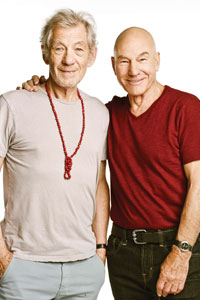
A funny, haunting, and at times mysterious vaudeville is on view at Berkeley Rep for the next few weeks, performed with remarkable subtlety by Ian McKellen and Patrick Stewart. Harold Pinter’s 1974 play No Man’s Land is a strange, rueful but always entertaining match of wills between two aging writers—the mischievous and needy poet Spooner (McKellen) and the patrician but vulnerable Hirst (Stewart)—who have recently met in a pub but who perhaps know each other already. Their encounter over the course of a night and a day’s conversations is a masterfully choreographed do-si-do of wit and despair.   

I was not previously familiar with this Pinter play, but the current production, directed by Sean Mathias, completely disarmed me. Though set entirely in a drawing room, watching it is like entering a farcical dream-space that is tinged with something dreadful just beyond the shadows. Nothing really happens, but everything seems at stake.

The two Sirs—titans of the screen though they may be—are enormously enjoyable to watch and listen to in vivo (ably seconded by Billy Crudup and Shuler Hensley as Hirst's man-servants/ bodyguards), since the play’s dialogue is delicious and musical, and their plummy, Shakespeare-trained voices and exquisitely nuanced physical choices can be savored in the intimacy of the Roda Theatre. (In the preview performance I attended, even McKellen's occasional first-act slip-ups--calling for prompts with a subtly inserted "Yes" rather than the usually disruptive "Line?"--served to remind me of the high-wire thrill of watching artists performing in the moment.) The production is here for just a few weeks, en route to Broadway where the cast will perform it in repertory with Waiting for Godot.

I came home and immediately found that the original National Theatre (London) production with the legendary John Gielgud and Ralph Richardson can be viewed in its entirety on YouTube. Watching it didn’t diminish my appreciation for the current production at all, and in fact made me marvel at how fresh and mysterious the play continues to be nearly 40 years later. Catch it if you can.


0 Comments

A as in Aleph

7/2/2013

0 Comments

 
Picture
Just as Frameline wraps up, it's time for my alma mater to rev up. This year's San Francisco Jewish Film Festival lineup is enormous! Being the word nerd that I am, and having been an editor of the SFJFF catalog for eight years, I immediately noticed that nearly 1/4 of the program titles this year start with the letter "A." What does it all mean?

I was glad to get a head start on this year's SFJFF by pre-screening and providing some program notes for a few films (my former colleagues Jay Rosenblatt and Joshua Moore know me well enough to send me films they figured I would like).

Check out my early take on these titles:

  • Aftermath
  • American Jerusalem
  • In the Shadow
  • Out in the Dark

A few other titles I am eager to see at the upcoming festival:
  • Alan Berliner's latest film, First Cousin Once Removed
  • the documentary profile of Joseph Papp
  • Margarethe von Trotta's drama about Hannah Arendt
  • new episodes of the wonderful TV series Arab Labor

I can also recommend two more films I have had a chance to screen elsewhere: 50 Children and After Tiller, the latter an especially important doc about some very courageous abortion providers.

Finally, I hear from well-placed SFJFF officials who prefer to remain anonymous that the dramas The Attack and Aya are well worth seeking out. Or maybe it's just that they start with "A."


0 Comments
<<Previous
Forward>>

    Author

    Peter L. Stein

    Archives

    November 2021
    June 2021
    September 2020
    June 2020
    June 2019
    June 2018
    August 2017
    June 2017
    June 2016
    November 2015
    October 2015
    May 2015
    December 2014
    September 2014
    August 2014
    July 2014
    June 2014
    May 2014
    April 2014
    January 2014
    September 2013
    August 2013
    July 2013
    June 2013

    Don't miss Peter's next post!

    Receive new entries automatically. Type your email address:

    Delivered by FeedBurner

    RSS Feed

Powered by Create your own unique website with customizable templates.